Home

01
Join Us, In Saving Lives And Engineering The Future
We are a diverse team of talented people who are dedicated to building technology that radically improves human lives.
June 20, 2026
blackrock-jessn
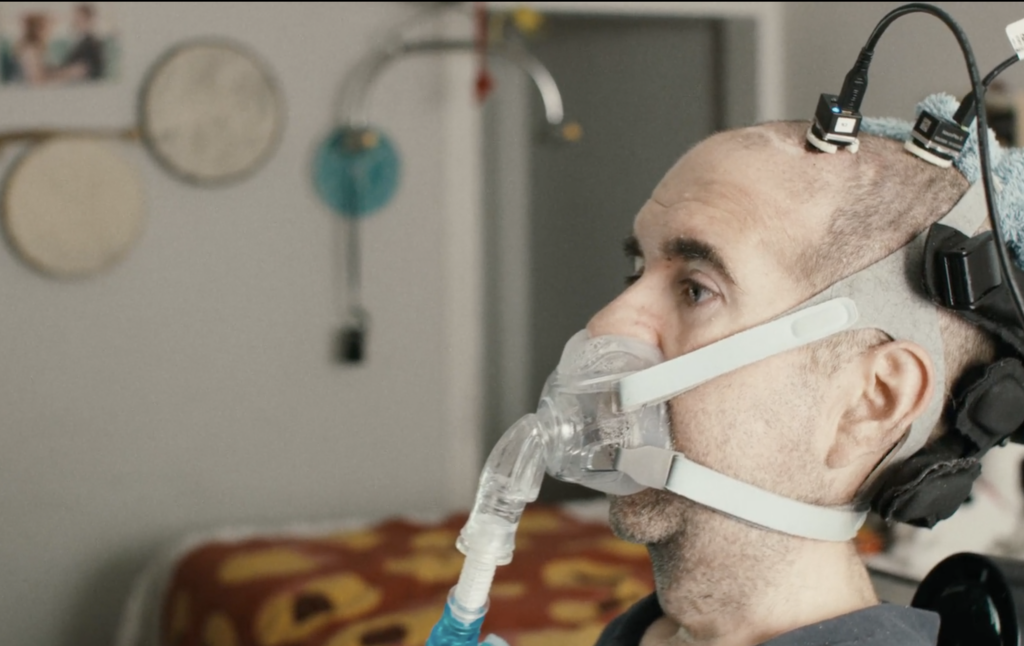
Casey Harrell spent his career using his voice. For more than two decades he worked as an environmental campaigner, the kind who got large companies and larger banks to change how they operate. Then ALS began to take that voice away. By mid-2023, he could no longer speak to his four-year-old daughter.
That year, he received a neural implant built on Blackrock Neurotech’s technology. Within weeks, he was talking again, in a voice rebuilt to sound like his own. Casey became the first person with ALS to hold fluent, real-time conversations through a brain-computer interface.
Two years later, he still uses it every day. Hear Casey’s Story in His Own Words Here.
Casey’s activism started at Duke University in the late 1990s, pressing Nike to disclose conditions in its supply chain. At Greenpeace, he led campaigns that moved Apple and other technology companies toward renewable energy. He later carried that work into finance, pushing some of the world’s largest asset managers to treat climate risk as investment risk.
His ALS diagnosis did not slow him down. It made him faster. “My diagnosis has put me on the ALS clock,” he told Bloomberg Green in 2021. “I feel really connected to what others feel around a need to act on climate now, not by 2050, in a real visceral way.”
In 2023, Casey enrolled in a UC Davis–led clinical trial. Surgeons placed four Blackrock Neurotech microelectrode arrays over the part of his brain that controls speech. The arrays read the signals behind every word he tries to say and turn them into sound, in a recreation of his own voice, fast enough to hold a real conversation. The work was published in the New England Journal of Medicine in 2024.
The words are Casey’s. He chooses them in the moment, the way anyone does. He uses the system to run meetings, send emails, text friends, and read his daughter bedtime stories. “I can simply tell her how much I love her,” he said.
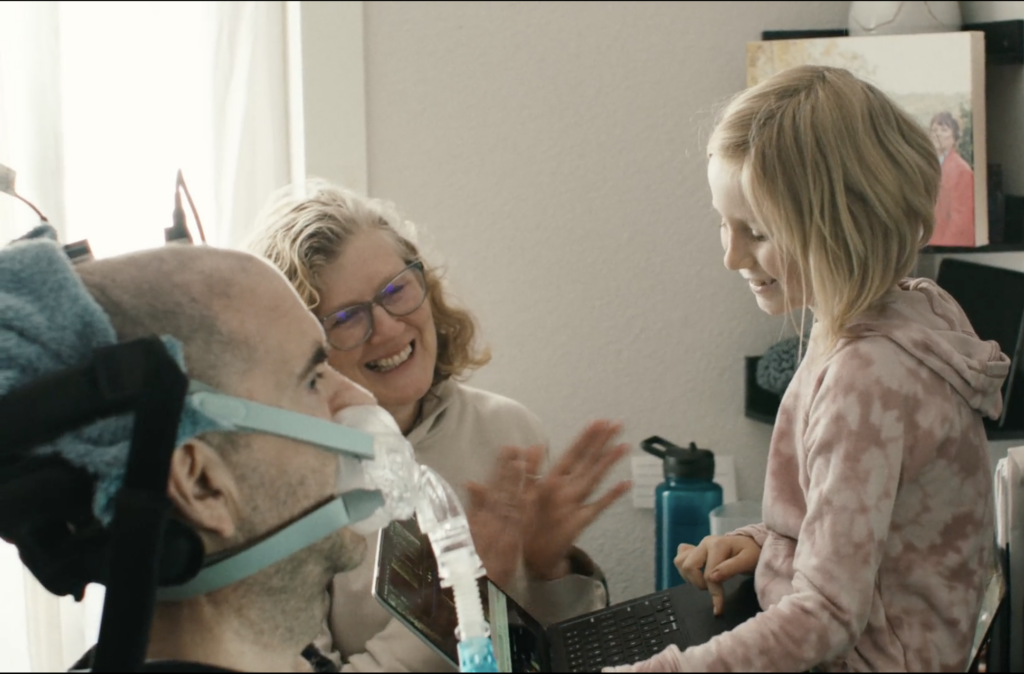
What sets Casey’s story apart is not a single day in a lab. It is everything that came after. Over nearly two years at home, on his own, he has spoken close to two million words through the system and kept a full-time job. A follow-up study in Nature Medicine, published in 2026, documented accuracy that has held above 99 percent across that time.
The technology stopped being an experiment and became part of an ordinary life.
Read More: At-home brain implant gives man with motor neuron disease his daily life back
Casey wants this to reach everyone who needs it. He pushes for patient-centered research, sustained funding, and a principle he states simply: communication is a basic human right.
He and his wife, Levana Saxon, are careful about how the technology is described. It reads the intention to speak, and only that. Any system like it, they argue, should keep the user in control, with consent and dignity at its center.
For Casey, the implant gave back his voice. The rest, what he does with it, has always been up to him.