Home

01
Join Us, In Saving Lives And Engineering The Future
We are a diverse team of talented people who are dedicated to building technology that radically improves human lives.
February 18, 2026 - February 18, 2026
Virtual
How does intracortical microstimulation actually give rise to meaningful sensory percepts—and what does that imply for how we design and interpret stimulation experiments? In this webinar, Dr. Hughes will unpack the core ideas from his paper, “Neural mechanisms of intracortical microstimulation for sensory restoration,” through a focused, discussion-driven format. Moving beyond a traditional paper walkthrough, he will distill key mechanistic principles, connect them to foundational and recent work in the broader literature, and explore how these insights inform real-world stimulation strategies. The result is a practical, conceptually grounded tutorial aimed at researchers and neurotechnology developers seeking a deeper understanding of how stimulation interacts with cortical circuitry to produce sensation.
Read his paper here: https://www.nature.com/articles/s41551-025-01583-6
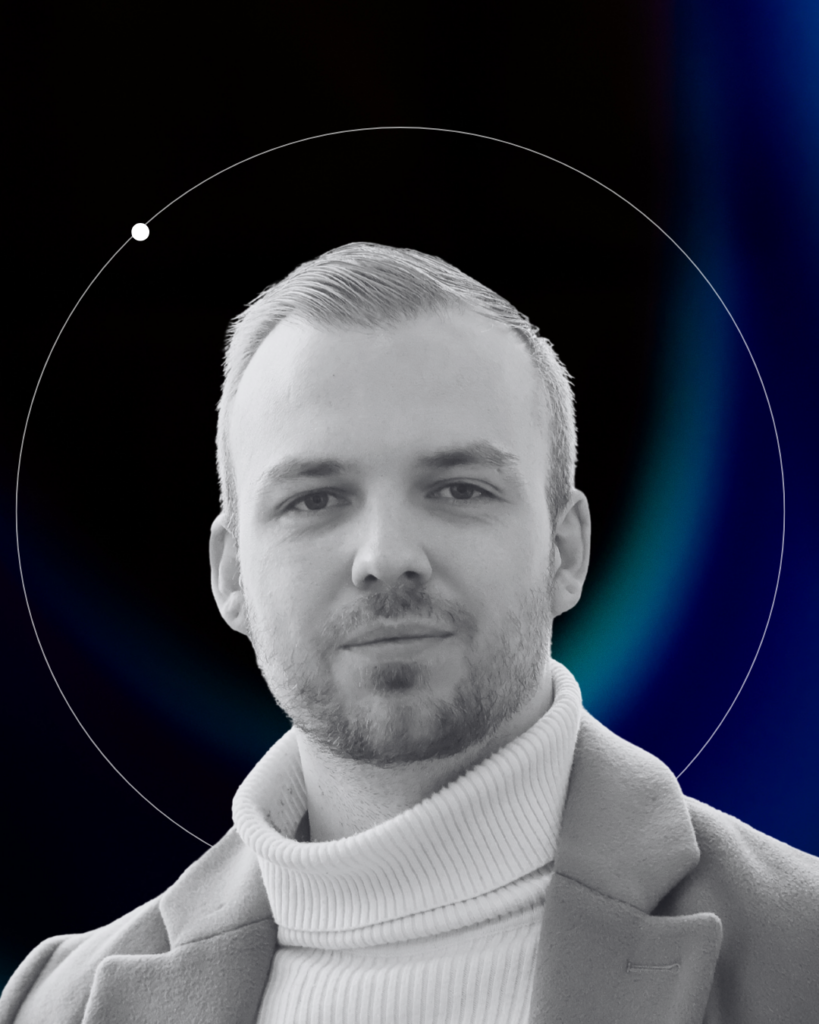
Christopher Hughes is a Senior Clinical Engineer at Blackrock Neurotech and a leading expert in cortical microstimulation, with experience spanning first-in-human neurotechnology, preclinical neuroscience, and mechanistic studies of neural stimulation. He earned his B.S. in Neuroscience summa cum laude and an M.S. in Bioengineering from the University of California, Riverside. He completed his Ph.D. research in the Rehabilitation and Neural Engineering Laboratories at the University of Pittsburgh under the mentorship of Dr. Robert Gaunt, where he worked on the first-in-human implantation of Utah microelectrode arrays in the somatosensory cortex for sensory restoration. Here, his work focused on integrating stimulation into bidirectional brain–computer interfaces, assessing the long-term stability of sensory electrodes, characterizing perceptual responses across stimulation parameters, and implementing novel biomimetic approaches for sensory restoration. This work contributed to several high-impact publications, including papers in Science, eLife, Brain Stimulation, and the Journal of Neural Engineering. Following his doctoral training, Dr. Hughes was awarded an NIH F32 Postdoctoral Fellowship, which he completed with Dr. T.K. Kozai. His postdoctoral research focused on the mechanisms of cortical microstimulation in rodent sensory cortex, leveraging two-photon, high-resolution imaging to link neural activation patterns with stimulation parameters. This work resulted in additional publications in Nature Biomedical Engineering, Brain Stimulation, and iScience.