Home

01
Join Us, In Saving Lives And Engineering The Future
We are a diverse team of talented people who are dedicated to building technology that radically improves human lives.
September 30, 2026 - September 30, 2026
Virtual
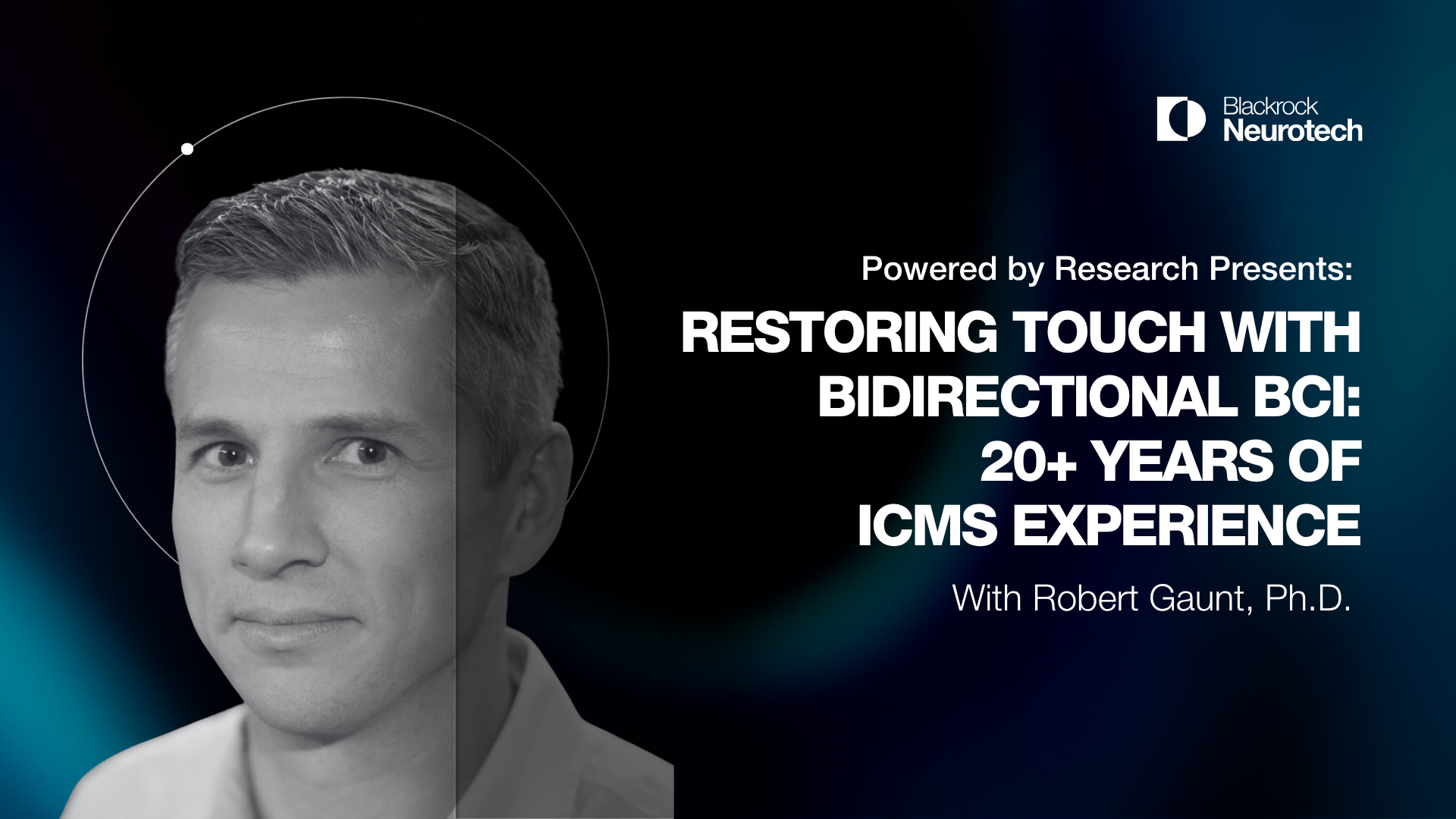
After a high-level spinal cord injury, people consistently rank improved hand function as their highest rehabilitation priority. The work in Gaunt’s lab has focused on using brain computer interfaces to address this critical unmet need. Using arrays of microelectrodes implanted into the motor cortex they have re-enabled complex, voluntary control of robotic arms. Using these same electrodes implanted into the somatosensory cortex, they have also use intracortical microstimulation to create artificial tactile sensations, thus creating a bidirectional brain-computer interface that restores both movement and tactile sensations.
Gaunt will describe the capabilities of these systems, how sensory feedback improves performance, and how new stimulation strategies enhance the naturalness and repertoire of artificial sensations. He will particularly focus on the long-term performance of these systems – safety, efficacy, what works well, and what doesn’t – over more than two decades of implant experience.
Robert Gaunt is an Associate Professor of Physical Medicine and Rehabilitation at the University of Pittsburgh. His research focuses on sensorimotor control of the hand and bladder with the goal of restoring function to individuals living with spinal cord injury, limb loss, and other major sensorimotor disabilities. To achieve this, his lab leads multidisciplinary efforts to develop neurotechnologies that interface directly with the brain, spinal cord, and peripheral nerves as well as the neuroscientific knowledge necessary to use these devices. Active projects include the development of bidirectional implantable brain-computer interfaces to restore movement and sensation, as well as the creation of neural interfaces to regulate bladder function through spinal and peripheral pathways. Dr. Gaunt holds several patents, and his work has been recognized by the National Academy of Engineering and featured widely in national and international media outlets.